Monday, 22 November 2010

Journey out of East Bay


It is the 27th of May 1987, a twenty two year old Tim Armstrong, later of such bands as Rancid and Transplants, is playing a show in his friend Dave Mello’s garage with his newly formed outfit Operation Ivy. To them this is just another weekend, but little do they know just what it will be the beginning of.

In the mid 1980’s the punk rock scene in California was becoming overcrowded by a thriving brood of hardcore bands. Many of the local DIY punk rock clubs were slowly being pushed out of business and the scene was in danger of becoming stagnant. Then, in 1986, a change came. The town of Berkeley on the east shore of the San Francisco bay paid witness to the opening of what would later become on of punk rock’s most celebrated residences; 924 Gilman Street.

‘The Gilman’, as it affectionately became known, would later become a regular home for such bands as Green Day, AFI, Bad Religion and The Offspring. It only had three simple rules; no violence, no alcohol and no drugs. It was a place where people of all ages could come together and enjoy the music they loved in its purest form.

One year after the Gilman’s opening, on May 28th 1987, it was the theatre for Operation Ivy’s first public show. The band had come equipped with a fresh, new sound, a sound which would later be dubbed ‘ska-core’. It was an amalgamation of familiar hardcore themes and more subdued, light hearted ska punk and dub tones, it was passionate and stripped down, and made to be played at an intimate gig. With this sound Operation Ivy had brought something original, exciting and ultimately influential to the genre; they kept the lyrical beliefs of social justice and community spirit alive, but harboured a much more upbeat tone.

It is this upbeat tone that went on to influence a whole generation of punk rock bands. It is noted that without Operation Ivy much of the 90’s punk revival would simply never have happened. Punk rock behemoths Green Day quote the band as one of their major influences, and to this day can be found playing a cover of knowledge at their gigs (a song that this very blog is named after). Elements of Operation Ivy’s sound can be found being used by a myriad of bands today, from Rise against to Reel Big Fish; they can truly be credited with forging much of the modern punk rock landscape.

To this day bands continually strive to keep the spirit of ’87 alive with their music and ethic. Operation Ivy disbanded in 1989 after only two years, but in this time played hundreds of shows and gained a massive cult following, centred around the Gilman. The band and their fans had an obsession with the idea of raw energy, urgency and hope. They loved the feeling of community, and the band was famously grateful and honoured to have developed the following that they did during their short lifespan.

The life and times of the band is chronicled aptly in Rancid’s song ‘Journey the End of the East Bay’;

Started in '87, Ended in '89, Got a garage or an amp, we'll play anytime. It was just the four of us, Yeah man the core of us, Too much attention unavoidably destroyed us. Four kids on tour, 3,000 miles, in a four door car, not knowing what was going on. We got a million years, of tourin' out like this, Hell no, no premonition could have seen this!

Can’t really put it better than that!

Operation Ivy – Operation Ivy (spotify link)

Saturday, 6 November 2010

A nice surprise...

Popular music nowadays is very hit and miss. Long gone are the halcyon days of the Who, the Stones and the Beatles; nowadays much of what we see in the charts is produced with the very same attitude as may be given to the creation of any other commodity. The production of many a hit song has become formulaic and repetitive, with artistic integrity being resigned to the backseat whilst profit maximisation rides up front. Celebrity songstresses are drafted in to sing a heartfelt chorus, whilst the relevant rapper of the hour provides us with a few apparent attitude oozing verses. Case in point; 'Love The Way You Lie' - Eminem & Rihanna; a familiar plod through radio-friendly territory explored countless times before. Worst of all this is Eminem were talking about! Fucking Eminem! ‘Love The Way You Lie’ is a million miles from ‘Stan’ or ‘The Way I Am’ in terms of candor. It isn’t that it’s a bad song, it just isn’t the Eminem that I grew up with. To be honest I haven't actually listened to all of his latest album release, and I'm not one to pass blind judgement, but I imagine it will leave me highly disappointed.

Anyway, I stray from the point. Now, I know I'm being rather histrionic, and the last thing I want to do is sound like a music snob, but I really don't think there has been a genuinely decent song in the UK top ten since everyone raged against the machine last Christmas. However, occasionally, something indubitably good suddenly burrows its way up through the thick crust of mediocrity and firmly roots itself in mainstream popular music culture for a few rapturous weeks. Outkast did it in the early 2000's for example with Stankonia. But we cannot simply sit and wait for Andre 3000 and Big Boi to come to our aid once again. There must be something else out there, something that can be popular and reputable at the same time. Something that has been put together with real intelligence and passion, rather than just a simple solve-all pop song formula (hello Timbaland...). So, ladies and gentlemen, at this point I will introduce to you; Kid Cudi...

Now, I know what most of you will be thinking; "is that not the perpetrator of the offence that was Day 'n' Nite?" The answer to that question is, well, partly yes. But the song we have all probably danced to mindlessly countless times in various clubs was mainly the work of Italian remix fiends Crookers, responsible also for a truly terrible rehash of AC/DC's Thunderstruck, amongst others. (Listen to it here, it is really awful. No, really!) The truth is though that the original version of Day 'n' Nite is actually quite impressive, and not only that, but it is also probably one of the weaker tracks on Kid Cudi's 2009 masterpiece 'Man On The Moon: The End Of Day'.

I urge anybody reading this to listen to his album. It is really, really brilliant. I mean, I am not big on this type of music, this is not what I would usually choose to listen to, but Kid Cudi's album is just really, really good!

The opening track; 'In My Dreams (Cudder Anthem)' sounds like the intriguing offspring of Snoop Dogg and Erasure, a concoction which leads perfectly into 'Soundtrack 2 My Life', a true highlight of the album inaugurated brilliantly with the line "I got 99 problems, and they all bitches..." A line which could be considered the light relief of the whole affair, as from here on in Cudi's lyrics become as dark as a Val Lewton movie. He takes us through his dreams and his nightmares, his thoughts, his doubts and his beliefs. His use of language is, at times, enchanting and more often than not ferociously honest. The third track on the album; 'Simple As...' is one of the most original alternative hip hop songs I've heard in the last year. The use of sampling is as well executed as the likes of DJ Shadow or The Avalanches, but Cudi's obvious rap influences give the song another layer. His combination of lyrics with delicate sampling is reminiscent of Cypress Hill or the Pharcyde. He comes across as having a truly reverent modesty, combined with a level of confidence and pure cool comparative to distinguished rappers at the top of their game.

The album is clearly influenced by early hip hop; N.W.A, A Tribe Called Quest and the like, but also has an obvious appreciation and understanding of the contemporary manifestation of the genre. Elements of trip-hop are present on the track 'Sky Might Fall', which are partnered perfectly with an admirably assured delivery from Cudi. ‘Make Her Say’ samples the piano version of Lady Gaga’s ‘Poker Face’ whilst ‘Hyyerr’ borrows parts of ‘Early Morning Love’ by Lou Rawls. The use of samples from these two very separate eras serves to reflect what Kid Cudi’s album is all about; an honest obsession with popular music in general, a collection of influences from a vast range of origins, carefully compiled in the form of a radio friendly hip hop LP.

The real highlight of the album for me however, lies in the lyrics. Kid Cudi writes with confidence and vigour about subjects rarely touched upon within his genre. Many of his songs are social commentaries Stuart Hall would probably be proud of. There is myriad science fiction influences on the album; present apparently because Kid Cudi and Kanye West played sci fi movies on silent whilst making it. Cudi’s songs are often complex explorations of life, dreams, nightmares and the potential meanings of all of the above. He takes a critical view of the world but at the same time appreciates the shallow benefits of celebrity and consumerism. The, in my opinion, best song on the album; ‘Pursuit Of Happiness’ is an optimistic take on the American dream, a brief analysis of life itself and a celebration of simplicity and chemical romance. It is a really brilliant song, helped along by the contributions of MGMT and Ratatat, the music of whom suits the lyrics perfectly.

The final song on the album; ‘Up Up & Away (The Wake and Bake Song)’ is a well fitting conclusion, replicating the benefits of its very own subtitle. It strays away from the dark nature of much of the rest of the album and leaves us in a positive mood. We are also rewarded by a hint at a sequel album by Common, promising that our thirst for more will thankfully be quenched.

As you can probably tell, I really like this album. I think Kid Cudi has taken pop music back to heights it hasn’t experienced for years. Get yourselves on Spotify and listen to this it, or go and buy it, whatever, I don’t care, you just need to hear this!

Pursuit of Happiness

Soundtrack 2 My Life

Simple As...

Wednesday, 3 November 2010

What is film?

A short piece I wrote for my course. It's kinda pretentious but I thought I'd post it anyway...

What is film?

Film is an oddity. It is one of the only known things that can remain a respected art form as well as a lucrative commodity at the same time.

Film is a very personal thing to its creator, but it can be related to and adored by millions. Passion is intrinsic to the filmmaking process, without passion, film would not be an art form, nor would it be lucrative because audiences could not connect with it. All art requires passion, but film is unique. It is the only manifestation of art that can tell stories, create characters and play with emotion in such a seemingly straightforward yet inconspicuously complex way. Film can be enjoyed by the masses on a basic level, but can be analysed by a few on an academic one.

Film can be read in myriad different ways, but essentially it is a personal indulgence. Something which filmmakers and audiences alike can enjoy within their own imaginations; in secret. An intimate understanding relevant only to yourself, but also something which can be shared countless times.

Film is many things, it is an enigma, it is an escape, and it should be celebrated!

Tuesday, 2 November 2010

Do you like scary movies?

Considering Halloween has just but past, I thought it appropriate to write a short article on the one genre of cinema that always manages to shock and terrify no matter what the era; that of the horror film.

I don’t want to attempt to give you an extensive history of this most terrifying of movie breeds, Mark Gatiss is doing a very good job of that as we speak in his current BBC series. No, I rather want to focus on a couple of film specifics; one old one new, both successful with audiences, and both apt manifestations of horror cinema at the time of production. I am going to focus on the 1931 original gothic glorification ‘Dracula’, and the 2010 tenebrous tension architect ‘Paranormal Activity 2’.

In 1931 when Dracula was released it shocked audiences the world over. People came in their droves to see Bela Legosi’s brooding vampire creation leer over Helen Chandler in a strangely charming yet utterly macabre manner. At the time it was incredibly novel, and paved the way for what would eventually become one of Hollywood’s most lucrative of film genres. Watching Dracula now though is unsettlingly difficult, in a completely different way to what I’m sure it would have been in the 1930’s. The movie now seems to almost become parodical in its approach, with many of the scenes seeming to garner laughs rather than frights. The slow pace of the film and long silences begin to almost seem obtrusive and uncomfortable. It is still one of the greatest horror works of all time, but I can’t help but feel Tod Browning’s celebrated vampire flick might be becoming a little, well, dated.

It becomes hard to realise that Dracula is actually creating most of what we now see as horror movie conformities, rather than trying to tag along with them. The dark castle, the wolf howls, the local legend-keepers who are unsuccessful in their attempts to stop the naïve from venturing ‘up there’… These are all recognisable mainstays of a genre that has come miles in 79 years, but to Dracula’s original audiences were terrifyingly new images they had never experienced in the same way before.

Despite this, Dracula still lacks many a scary movie linchpin. There is no blood, no gore and no delicately chilling musical transcript (something which gives the film an entirely new layer as proven by Philip Glass’ 1999 rescore). The film could seem pedestrian in comparison to much of the horrifying content cinemas have harboured in the last few decades. One thing that doesn’t seem pedestrian in any way whatsoever though, is Bela Legosi’s performance. His portrayal of Dracula is pure discomforting perfection. He creates this idea of ‘the other’; somebody who doesn’t fit in, somebody who is bleak and emotionless; the embodiment of evil itself. Legosi’s Dracula is timeless and arguably unmatched, and his 'other' character can be recognised in numerous terrifying popular culture icons since. These are individuals who cannot be understood and are therefore feared. From the monster in ‘Frankenstein’ to the deformed and inbred family of ‘Wrong Turn’, Legosi’s ‘other’ has spawned multiple spine-chilling manifestations.

A number of these manifestations have been much more traditionally shocking than Dracula himself, however. From Peter Cushing and Christopher Lee providing audiences with satisfyingly horrific hammer horror monsters, through to the ‘torture porn’ perpetrators present in recent box office hits ‘Saw’ and ‘Hostel’ many of horrors villains have been far more gore hungry than our simple vampire. Greg McLean’s ‘Wolf Creek’ is a good example of a modern character portrayed in Dracula’s vein, with John Jarratt’s serial killer character being played to deliciously menacing affect.

Skip back to the 1940’s however, and we can see the emergence of an entirely new kind of monster. One that is not obvious or in your face, but instead embraces your thoughts and contaminates your perceptions.

RKO director Val Lewton is famous for ridding his films of monsters we could actually see, in favour of letting audiences imagine what blood curdling peril lay in wait. He almost by accident created a genre we now all know well as ‘psychological horror’, and back in the 40’s, this was something truly nightmarish. Lewton’s films were great successes, portraying big names such as Boris Karloff to packed theatres. His movie ‘Cat People’ is credited with single-handedly rescuing RKO pictures from bankruptcy.
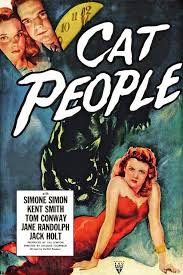
It could be said that Lewton’s appreciation of the unknown is what spawned films such as ‘Jacob’s Ladder’, ‘The Blair Witch Project’ and, as I will now discuss, ‘Paranormal Activity’ as well as its subsequent sequel, a duo of films celebrated by audiences as well as numerous critics, praised for its simple yet effective style of scare, brought on by a witty, tension filled script. The series has also been on the receiving end of a number of denunciations, and one could be forgiven for simply considering it an ‘indoor Blair Witch’, but generally the films have done pretty well for themselves.

Oren Peli’s two slow-paced shock filled thrillers are clear celebrators of the psychological horror genre. The entire films are shot either using a handheld camera or CCTV style footage. Paranormal Activity 2 has numerous scenes where seemingly nothing is happening, but will still inevitably leave you tenuously on edge, waiting for a very possible fright. The film builds and builds upon this ideal, eventually climaxing in a startling scene that wouldn’t be hard pressed to have the entire cinema jumping out of their seat. It chooses not really to focus on the macabre or the gothic like Dracula does, instead it relishes the idea of anticipation, the idea of taking the audience through a journey or pure tension and white knuckle stupor. Whether or not Peli took inspiration from the late great Val Lewton, his legacy is clearly splashed all over this film. The idea of not physically seeing the very thing you are terrified of is celebrated by Peli and Lewton alike, combining two very separate eras of horror cinema in a delightfully apt manner.

‘Dracula’ and ‘Paranormal Activity 2’ are not that different in their approaches. Both films don’t really have any explicit gore scenes, both films are chillingly slow paced and music-free creating a bleak and disturbing landscape. It is clear from watching these two movies however, how much audiences have matured in the last seventy years. Nowadays, filmmakers have to reach to whole new levels to acquire that ferociously coveted ‘scare factor’. What shook audiences of the 1930’s just doesn’t cut the mustard any more, new methods of unnerving cinemas packed with willing victims are being explored, often to great effect. It really is clear that no matter what the year or the culture, everybody has a desire to be scared by cinema. In the words of one of the great horror directors Wes Craven; “Horror films don’t create fear. They release it…

May the scary movie live forever! Happy Halloween…

Sunday, 17 October 2010

Layer Cake (2004)

So I'm going to attempt this film review thing; I watched Layer Cake last night so what better place to start than there?

To be honest it was hard to watch Matthew Vaughn’s 2004 attempt at the British gangster movie without making constant comparisons to Guy Ritchie’s arguable masterpieces Snatch and Lock, Stock… It was down to this fact, maybe, that I thought the whole film just kind of, missed the target a bit. The attempts to make an ultra-cool British gangster flick did not go unnoticed; with slick the camerawork and nonchalant discussions regarding matters that really should be treated anything but nonchalantly, (that seem to have become mainstays of the contemporary manifestation of this genre) present throughout.

Because of this, I have tried my best to analyse this film without considering the words ‘Jason’ or ‘Statham’.

The first thing I noticed is that the whole film has some kind of slightly off-putting ‘sheen’ plastered all over it. The action is often obscured by a strange cinematic effect that seems to serve only to massage somebody’s creative ego rather than actually evoke any real kind of emotion from the viewer. For example, in the final scene of the film, the song ‘Aria’ by Lisa Gerrard is played as we pay witness to the final endeavours of XXXX (Daniel Craig’s unnamed protagonist). ‘Aria’ is a beautiful, impelling piece of music that if used cleverly could create a stunning finale to the entire affair. Vaughn seems to have realised the song’s potential, and has attempted to create a kind of beautiful juxtaposition between event and accompanying soundtrack. It should work, I want it to work, and for a brief moment it sort of does work, but then you sit back and look again and realise that this film is maybe just trying a little too hard.

That’s just me being picky however, essentially Layer Cake is a good movie! Michael Gambon as Eddie Temple is an inspired choice, with his brilliantly apt description of Hector Berlioz’s The Damnation of Faust being a true nugget of writing genius; “Man sells his soul to the devil. All ends in tears, these arrangements usually do.” It isn’t just Gambon who gets the killer lines though, the film is packed with quick witted and clever dialogue that you really would expect from a movie of this kind, and the congregation of typically thick-accented British actors tend to pull them off with vigour. The story itself does not disappoint either, with enough plot twists to keep anybody’s eyes firmly glazed to the screen, and the creation of a feeling of genuine compassion for Daniel Craig’s nicely portrayed ‘drug baron with a conscience’ lead character.

Craig fits into the role surprisingly well, the James Bond in waiting could be forgiven for seeming quite unfitting in such a typified role, but he tends to be genuinely compelling, and even does something that is rarely seen in movies nowadays; actually shows some form of remorse for committing the act of murder! Craig’s monologues are always brilliant and become instruments that you not only need to help understand and progress with the story but genuinely look forward to hearing. His relationship with Sienna Miller is as captivating on camera as the tabloids would have considered it to be in the real world; he manages to maintain a level of cool confidence whilst still portraying raw, and sometimes incredibly touching, emotion.

Despite all of this, however, there is still a small, guilty part of me pining for a certain shaven headed cockney.

Beginning.

Hey, I'm Tom.

This is the first of what will hopefully be an extensive collection of my thoughts on popular culture in general, more often than not focussing on film, music and television, but inevitably swelling to encompass a number of different subjects, depending on what I'm into at that time.

I'll try to write some kind of film review every week, generally as part of my Film and Cultural studies degree, but hopefully I can remain quite restrained with these and stray away from anything too pretentious or indulgent.

I want to try different styles of writing and expressing ideas, and I don't want to restrict myself to a certain type of structure, so sometimes things might seem a little incoherent but bear with me!

Enjoy...