Considering Halloween has just but past, I thought it appropriate to write a short article on the one genre of cinema that always manages to shock and terrify no matter what the era; that of the horror film.
I don’t want to attempt to give you an extensive history of this most terrifying of movie breeds, Mark Gatiss is doing a very good job of that as we speak in his current BBC series. No, I rather want to focus on a couple of film specifics; one old one new, both successful with audiences, and both apt manifestations of horror cinema at the time of production. I am going to focus on the 1931 original gothic glorification ‘Dracula’, and the 2010 tenebrous tension architect ‘Paranormal Activity 2’.
In 1931 when Dracula was released it shocked audiences the world over. People came in their droves to see Bela Legosi’s brooding vampire creation leer over Helen Chandler in a strangely charming yet utterly macabre manner. At the time it was incredibly novel, and paved the way for what would eventually become one of

It becomes hard to realise that Dracula is actually creating most of what we now see as horror movie conformities, rather than trying to tag along with them. The dark castle, the wolf howls, the local legend-keepers who are unsuccessful in their attempts to stop the naïve from venturing ‘up there’… These are all recognisable mainstays of a genre that has come miles in 79 years, but to Dracula’s original audiences were terrifyingly new images they had never experienced in the same way before.
Despite this, Dracula still lacks many a scary movie linchpin. There is no blood, no gore and no delicately chilling musical transcript (something which gives the film an entirely new layer as proven by Philip Glass’ 1999 rescore). The film could seem pedestrian in comparison to much of the horrifying content cinemas have harboured in the last few decades. One thing that doesn’t seem pedestrian in any way whatsoever though, is Bela Legosi’s performance. His portrayal of Dracula is pure discomforting perfection. He creates this idea of ‘the other’; somebody who doesn’t fit in, somebody who is bleak and emotionless; the embodiment of evil itself. Legosi’s Dracula is timeless and arguably unmatched, and his 'other' character can be recognised in numerous terrifying popular culture icons since. These are individuals who cannot be understood and are therefore feared. From the monster in ‘Frankenstein’ to the deformed and inbred family of ‘Wrong Turn’, Legosi’s ‘other’ has spawned multiple spine-chilling manifestations.

A number of these manifestations have been much more traditionally shocking than Dracula himself, however. From Peter Cushing and Christopher Lee providing audiences with satisfyingly horrific hammer horror monsters, through to the ‘torture porn’ perpetrators present in recent box office hits ‘Saw’ and ‘Hostel’ many of horrors villains have been far more gore hungry than our simple vampire. Greg McLean’s ‘
Skip back to the 1940’s however, and we can see the emergence of an entirely new kind of monster. One that is not obvious or in your face, but instead embraces your thoughts and contaminates your perceptions.
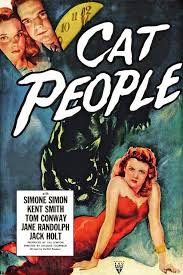
RKO director Val Lewton is famous for ridding his films of monsters we could actually see, in favour of letting audiences imagine what blood curdling peril lay in wait. He almost by accident created a genre we now all know well as ‘psychological horror’, and back in the 40’s, this was something truly nightmarish. Lewton’s films were great successes, portraying big names such as Boris Karloff to packed theatres. His movie ‘Cat People’ is credited with single-handedly rescuing RKO pictures from bankruptcy.
It could be said that Lewton’s appreciation of the unknown is what spawned films such as ‘Jacob’s Ladder’, ‘The Blair Witch Project’ and, as I will now discuss, ‘Paranormal Activity’ as well as its subsequent sequel, a duo of films celebrated by audiences as well as numerous critics, praised for its simple yet effective style of scare, brought on by a witty, tension filled script. The series has also been on the receiving end of a number of denunciations, and one could be forgiven for simply considering it an ‘indoor Blair Witch’, but generally the films have done pretty well for themselves.
Oren Peli’s two slow-paced shock filled thrillers are clear celebrators of the psychological horror genre. The entire films are shot either using a handheld camera or CCTV style footage. Paranormal Activity 2 has numerous scenes where seemingly nothing is happening, but will still inevitably leave you tenuously on edge, waiting for a very possible fright. The film builds and builds upon this ideal, eventually climaxing in a startling scene that wouldn’t be hard pressed to have the entire cinema jumping out of their seat. It chooses not really to focus on the macabre or the gothic like Dracula does, instead it relishes the idea of anticipation, the idea of taking the audience through a journey or pure tension and white knuckle stupor. Whether or not Peli took inspiration from the late great Val Lewton, his legacy is clearly splashed all over this film. The idea of not physically seeing the very thing you are terrified of is celebrated by Peli and Lewton alike, combining two very separate eras of horror cinema in a delightfully apt manner.

‘Dracula’ and ‘Paranormal Activity 2’ are not that different in their approaches. Both films don’t really have any explicit gore scenes, both films are chillingly slow paced and music-free creating a bleak and disturbing landscape. It is clear from watching these two movies however, how much audiences have matured in the last seventy years. Nowadays, filmmakers have to reach to whole new levels to acquire that ferociously coveted ‘scare factor’. What shook audiences of the 1930’s just doesn’t cut the mustard any more, new methods of unnerving cinemas packed with willing victims are being explored, often to great effect. It really is clear that no matter what the year or the culture, everybody has a desire to be scared by cinema. In the words of one of the great horror directors Wes Craven; “Horror films don’t create fear. They release it…”
May the scary movie live forever! Happy Halloween…

No comments:
Post a Comment